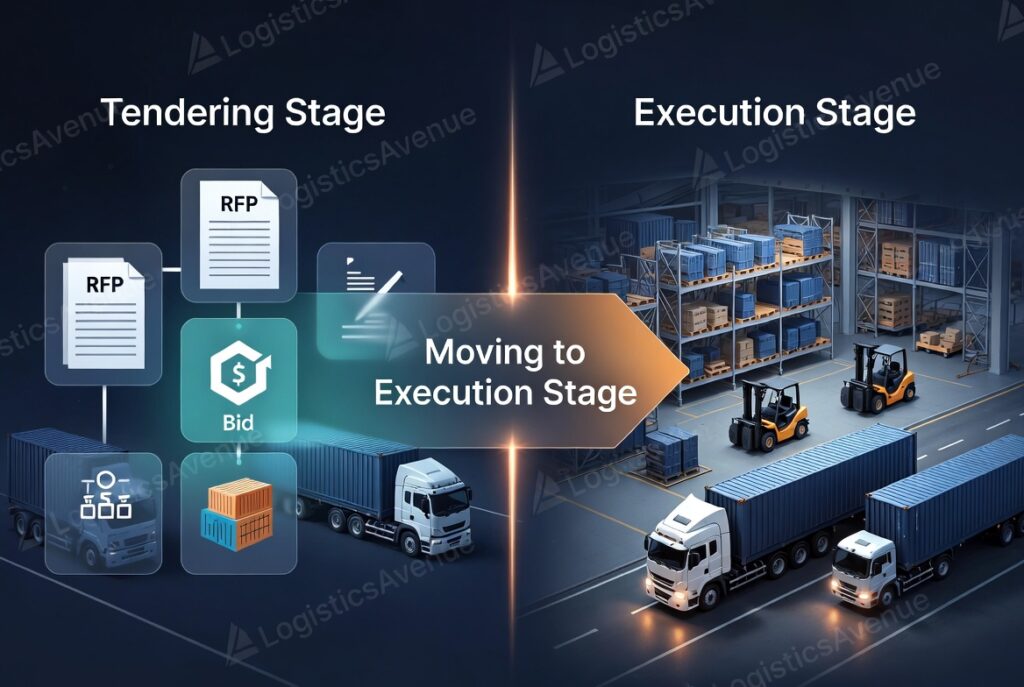
Contract logistics B2B space still remains a little bit of a mistery. Even to the insiders. But that’s maybe why it still possesses its charm to many. The unknown keeps many of us on the edge and the opportunities keep the excitement going. There is also a high impact of the ever changing and improving technological aspect which adds to both of the latter emotions.
While having gone through many RF(x) to contract execution cycles for different companies and industries, I would like to offer some observations, watch-outs and considerations for what the future might hold for us.
In a perfect world (wouldn’t that be nice to have in the logistics space once in a while 🙂 a well written and prepared RF(x) should produce broadly accurate proposals. The financials will have been well understood if enough operational granularity is included in the business specifications shared with the logistics suppliers. Things like order preparation lead times and cut-over times are vital to have well calibrated proposals. Adding a component of dynamic operational data will also go a long way in ensuring that the operational assumptions are pressure-tested by the potential peaks and valleys in a weekly, monthly and seasonal volumes throughput.
Now lets step down on our beautiful yet imperfect world. One way to buy an insurance against your newly negotiated logistics contract from becoming a nightmare to handle after just signing it is to spend the time and effort in drafting an operational-level proof of concept document. This document will have spelled out in clear and operational terms every process that needs to take place in the warehouse and on the delivery routes. It’s critical to go through this process before the contract is awarded. Otherwise, it will only add to potential disappointment and frustration.
Writing a logistics proof of concept is not a stroll in the park though. It’s time consuming and tedious. That’s why I think the future or maybe even the present state of technological advancements can significantly ease this burden. With the use of AI tools, I can now simply upload many unrelated documents and ask it to compile a well-structured and easy to read logistics concept.
The future of AI and the technology sector could potentially offer capabilities that run real life scenarios to see where the solution designed by your prospective logistics supplier might crack and cause the pain for both sides to be avoided. Over optimistic productivities on automation could be pressure tested by such software. Visualization of the warehousing operations could be played back by adjusting the volumes throughput to see if any peaks could lead to operational bottlenecks and business disruption.
Any thoughts from you?